
- Modules
-

Property Database
A single source of truth for every site across the portfolio.
-

Workflow Engine
Cross-module approvals and automations.
-

Transactions
Buy, sell, lease, sublease.
-

Projects
Construction budgets, cash flow forecasting, site plans, LEED tracking, job site cameras.
-

Inspections
Mobile-first field workflows that feed downstream into work orders, reporting, and analytics.
-

Leases
AI-powered lease abstraction with the controls to escalate critical dates and surface options before they're missed.
-
The foundation people don't think about. Until they need it.
Velocity's Property Database is the canonical record for every site in your portfolio. Address, ownership, leases, inspections, projects, documents, history. The source of truth every other module reads from and writes to, so the answer to "what's the status of this property?" is one query, not three meetings.
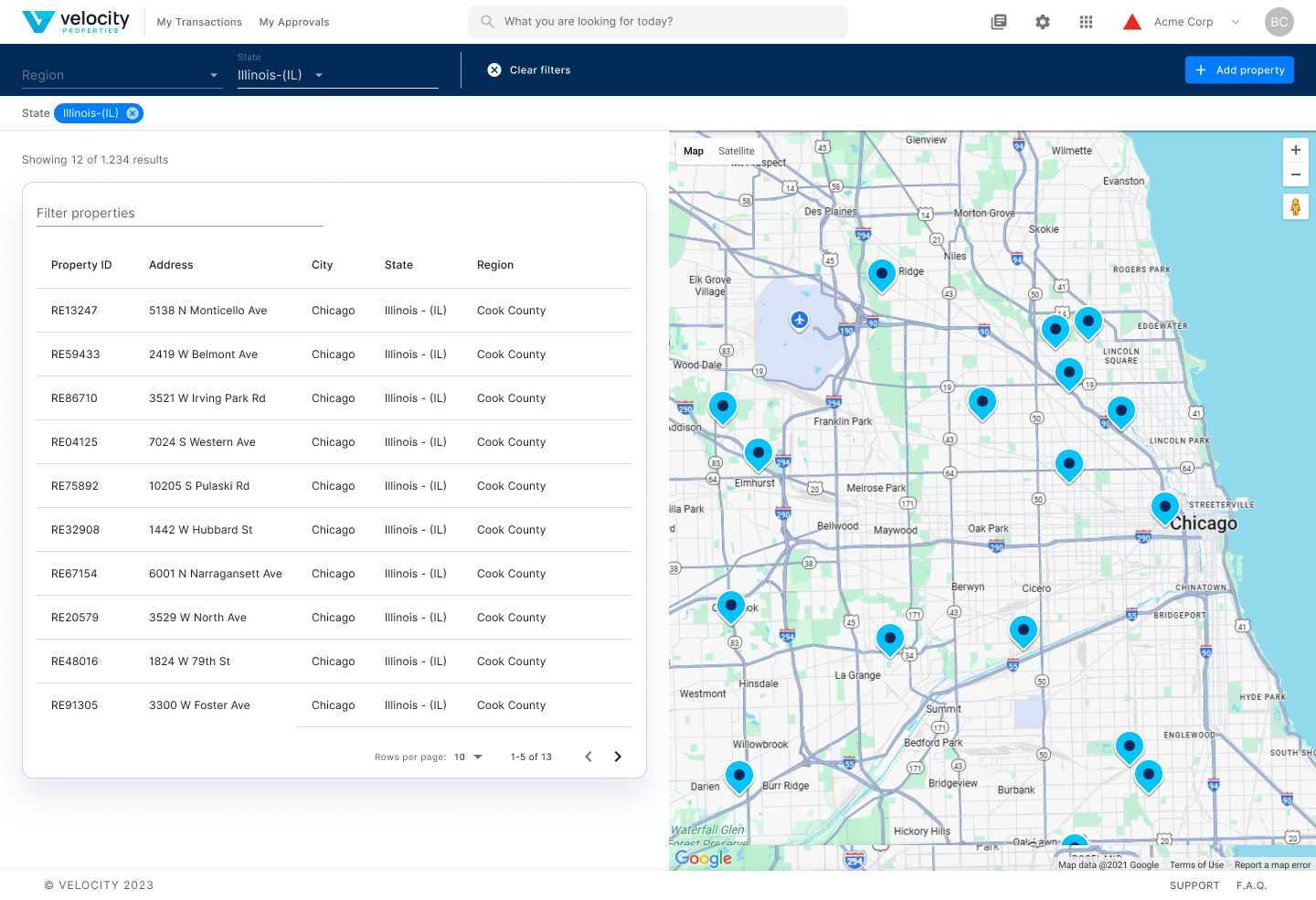
What gets bought as “one platform” is often six databases.
Legacy enterprise CRE platforms grew through acquisition. Each module came from a different company, with its own database, its own ID scheme, its own logic for what counts as a building. The result is “one platform” that needs three reconciliation meetings to answer a single question about a single site.
Velocity was built differently. One property record. One place. Used by every module. Your team stops translating between systems and starts answering questions.

Every detail of a site, in one
authoritative system of record.
A property in Velocity isn't a row in a spreadsheet. It's a structured record that holds everything every module needs to know about the site, and grows richer over time as your team works.

Identity
Address, building ID, type, square footage, year built. The basics every module reads first

Ownership and tenancy
Current owners, tenants, parent entities, contacts, and related parties tied to the property.

Lease portfolio
Active and historical leases for the site, with terms, options, escalations, and critical dates.

Transaction history
Every deal that ever touched the property: acquisitions, dispositions, subleases, renewals.

Capital activity
Projects, budgets, change orders, and construction history tied to the site over time.

Inspection record
Field inspections, findings, photos, and follow-up actions, going back as far as the data does.

Documents
Lease agreements, blueprints, permits, certifications, and contracts in one secure location.

Location and mapping
GIS-ready coordinates, spatial relationships, and integration with your mapping tools.
What teams ask about the backbone.